Field note · October 17, 2026
At a holiday market nobody buys a candle. They buy a present for a teacher, a neighbour, a cousin they will see on the 24th.
If the piece still looks like stock on a table, they have to turn it into a present themselves. Do that for them, and the price stops being the only question.
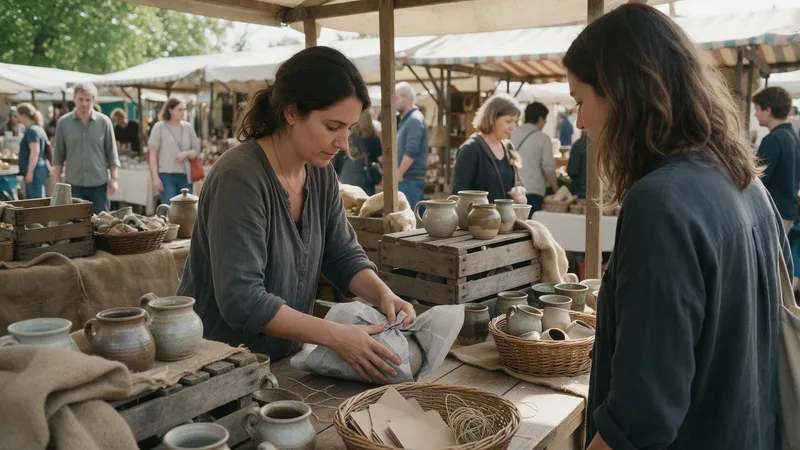
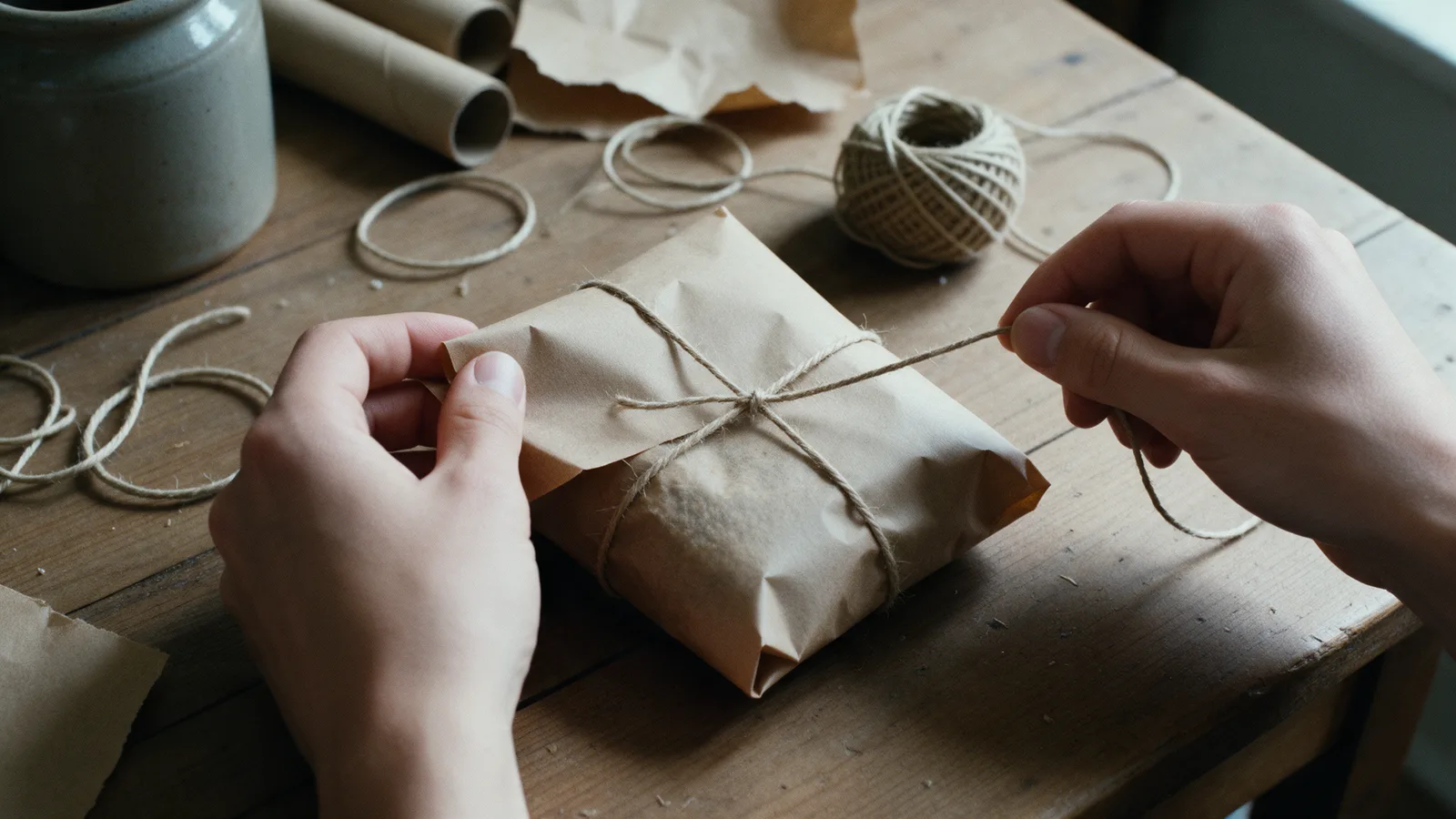
Bag it, or wrap it. A paper bag, a sticker with your name, a length of twine. Cents. It changes "thing I bought" into "gift I can hand over".
Quote the gift price. "That one is twenty-two, wrapped." The same number lands differently.
Sell the pair. Two soaps. Three cards. A jar and a spoon. The basket costs more than the jar, and nothing is discounted.
Keep one finished gift on the table. Wrapped, tagged. People see what you mean, and one of them buys the display.
None of this is decoration. It is the difference between "I'll think about it" and "I'll take two, one for each teacher".
From a real fair: the same jar, wrapped and tagged, sold three dollars more than the one beside it.
Quick answers
Why does wrapping raise the price a shopper will pay?
The shopper is buying a gift, not an object. Wrapping does the work they would otherwise have to do at home.
What is the cheapest change that raises an average sale?
Wrap each piece, put a tag on it, and offer a pair or a bundle. It costs cents and changes what the item is worth to the buyer.