Field note · October 22, 2026
Four o'clock at a holiday market. The hall smells of coffee and wet coats. The morning crowd is home with their bags, the next wave is an hour away, and your table has been picked over since ten.
It is not the stock that looks tired. It is the table.
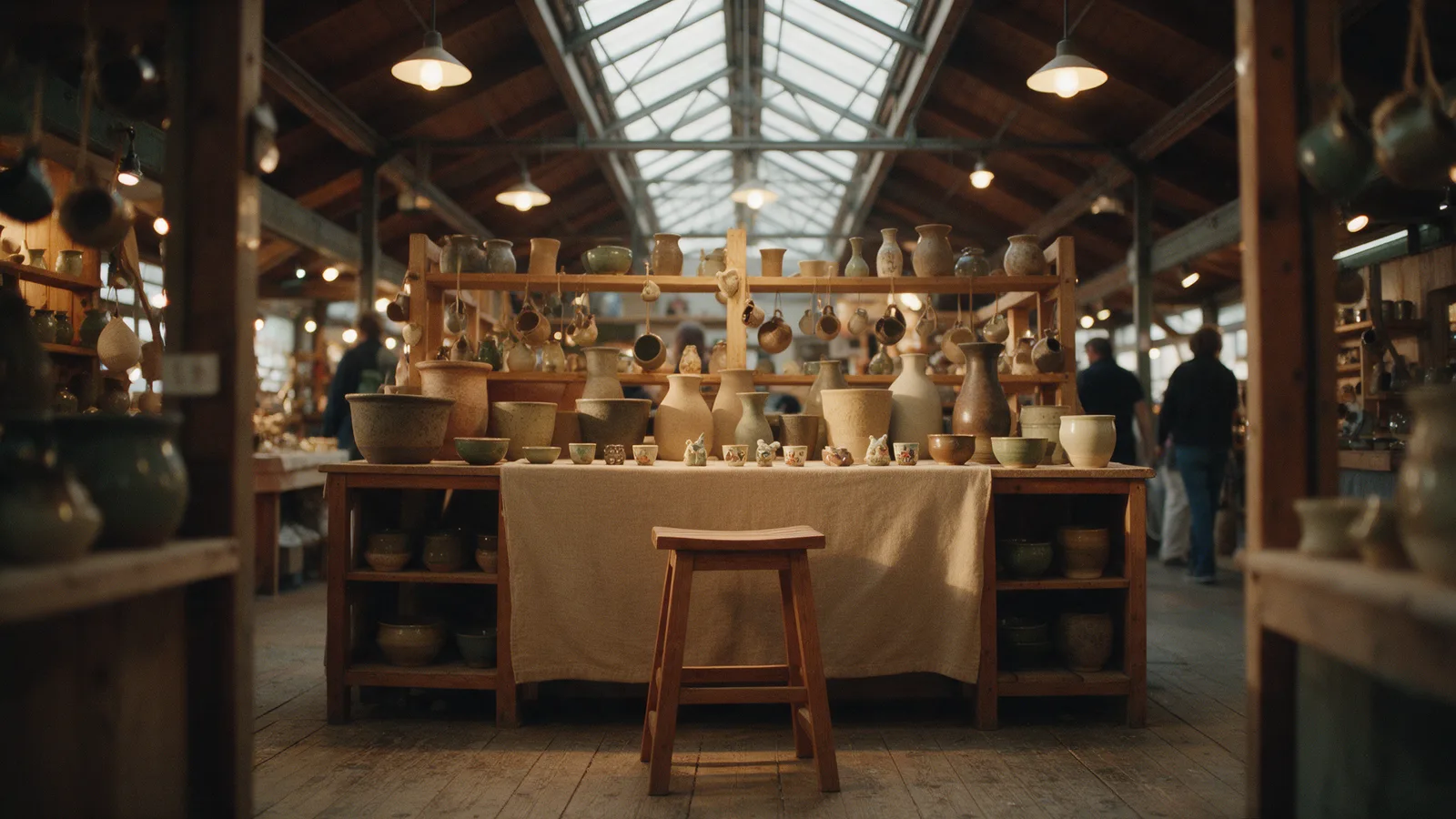
Straighten, do not rearrange. Pull each piece to the front edge of its row, turn the labels toward the aisle, take the empty box away. Three minutes, no new stock.
Fill the holes. A gap where a bowl sold reads as "nothing left". Move a piece into it, or lay a folded cloth there. People buy from a full table.
Dust shows at four. A cloth in your bag, used once. Under the lights, a fingerprint on a glaze looks like a scratch.
Do not discount at four. The people walking in at four are the ones who pay full price. A sale sign at 4 p.m. tells the last two hours that your work was too expensive at ten.
If you have energy for one thing in the last hour, make it eye contact. The table is fine. A vendor sitting down, looking at a phone, is what keeps people walking.
At five, pack it the way you would want to find it tomorrow.
From a real fair: the table that sold most in the last hour was not the fullest. It was the tidiest, and the vendor was standing.
Quick answers
Why does my table stop selling in the afternoon?
Usually not the stock. Gaps, turned labels and a vendor sitting behind a phone tell shoppers the day is over.
Should I discount at the end of the day?
Not at a fair where people still walk in at four. A discount at 4 p.m. prices the whole day down.