
Field note · October 23, 2026
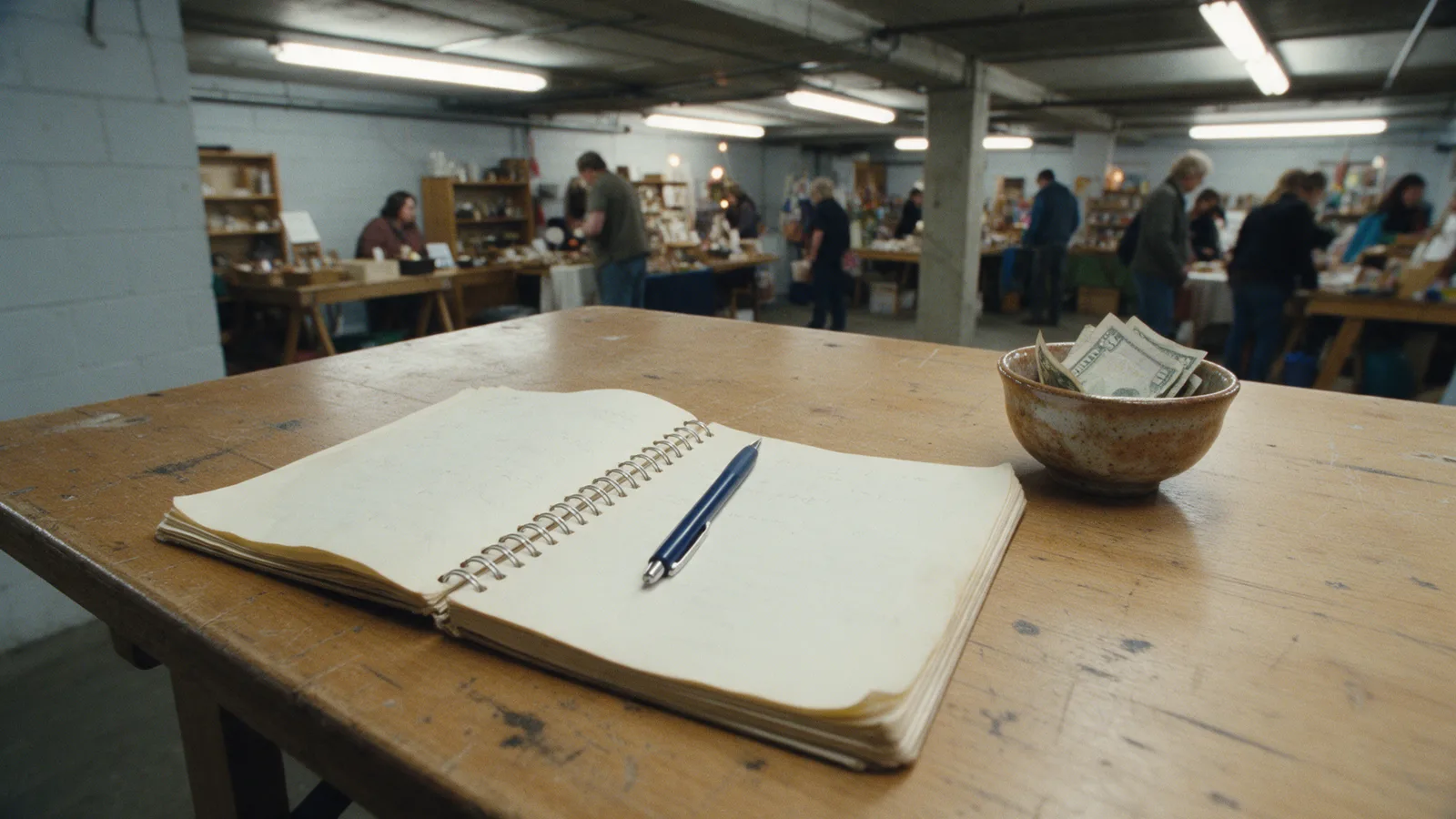
The parish hall is in a basement. Stone walls, one door, and no bars on your phone.
At ten, someone wants a twenty-dollar bowl and holds up a card. Your reader spins. No signal, no payment, and the shopper has already half turned away.
Know what your reader does offline. Most card readers can take a payment without a connection and send it when the signal comes back. Some cannot. Try it at home, in airplane mode, the night before the fair. If it refuses, you know now, not in front of a customer.
Carry a float that can make change. Sixty dollars in fives and ones, counted before you leave. The first sale of the day is often a twenty, and the first problem is having no change for it.
Put a sign where people pay. "Cash or tap." Two words, at eye level. It stops the question before it starts.
Keep a paper order book. Name, phone, what they wanted, the price. When the reader dies, you write it down and send a payment link that evening. The sale is slower, not lost.
Battery is part of the kit. A power bank, charged, in the bag. A dead phone at two o'clock is the same as no terminal at all.
None of this is complicated. It is the difference between a fair where the machine failed and a fair where you lost the sale.
From a real fair: the vendor who sold the most in a basement hall had a paper book and a float. Her reader never worked once.
Quick answers
Can I take card payments without a signal?
Often yes, if your reader has an offline mode — but you have to test it before the fair, in airplane mode. Some readers refuse offline payments entirely.
How much cash should I bring to a fair?
Sixty dollars in small bills is enough to start. Count it before you leave and keep it apart from the day's takings.