Field note · October 21, 2026
A shopper slows down in front of your table. Looks. Keeps walking.
It is not your work they are judging. It is whether stopping will cost them something: a conversation they cannot end, a pitch, a price that will embarrass them.
So make stopping cheap.
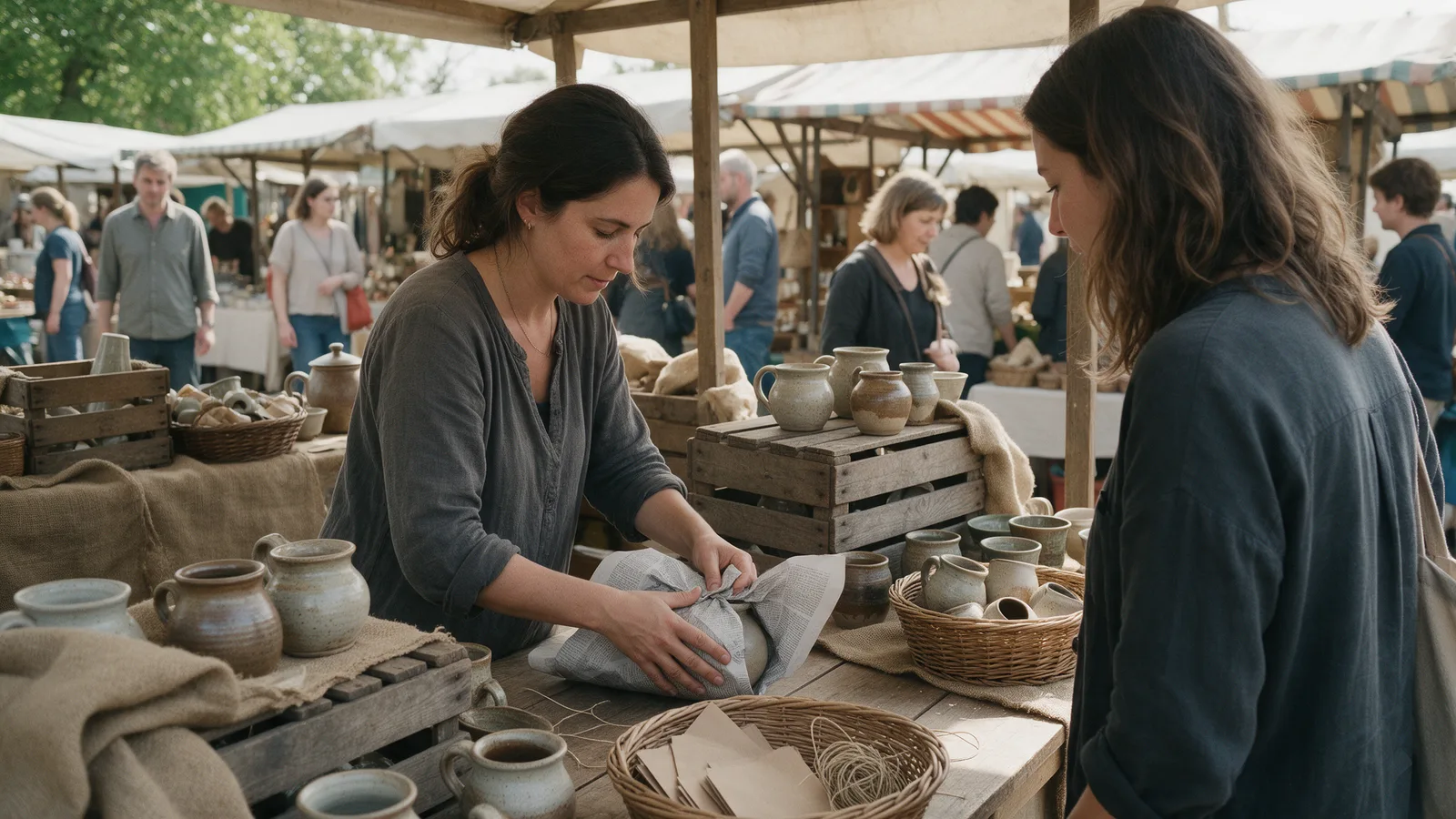
Lift a few pieces. A box under a cloth, a small shelf. If everything lies flat, the shopper has to bend, and most will not. The first thing they should meet is a piece, at eye level.
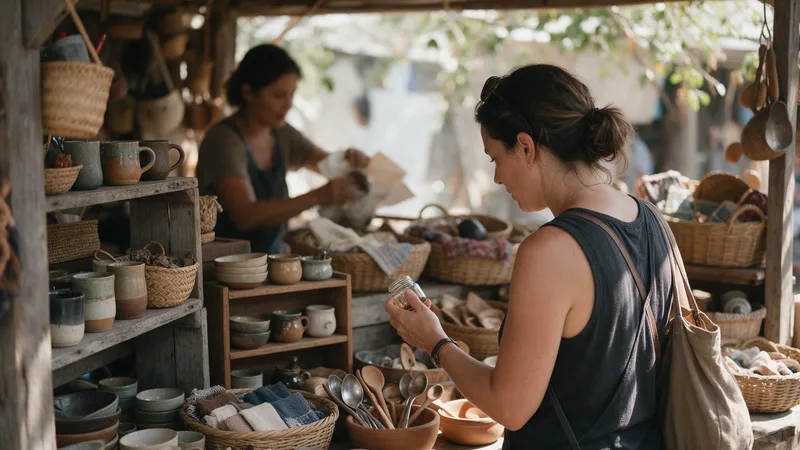
Keep your hands moving. Cutting, wrapping, writing a tag. A vendor with busy hands is easier to walk up to than one watching the aisle.
One sentence, then silence. "The honey comes from hives ten minutes from here." Then look down and keep working. The silence does the work; the shopper can ask, or not.
Do not open with "Can I help you?" It hands them "just looking", and now both of you have to get out of it. A remark about the piece leaves the door open.
The people who stop today are not all buyers today. Some come back Sunday. Some order that night. Your only job at the table is to make stopping easy.
From a real fair: the vendors who talked least and worked most had the most people at their table.
Quick answers
How long does a shopper take to decide whether to stop at a booth?
A few seconds. Most people decide before they reach the table, based on whether stopping looks easy or awkward.
What should a vendor do instead of asking “Can I help you?”
Say one sentence about the work, then stop talking and keep working. The silence is what lets the shopper ask a question.
The full guide: How to get shoppers to stop at your table.