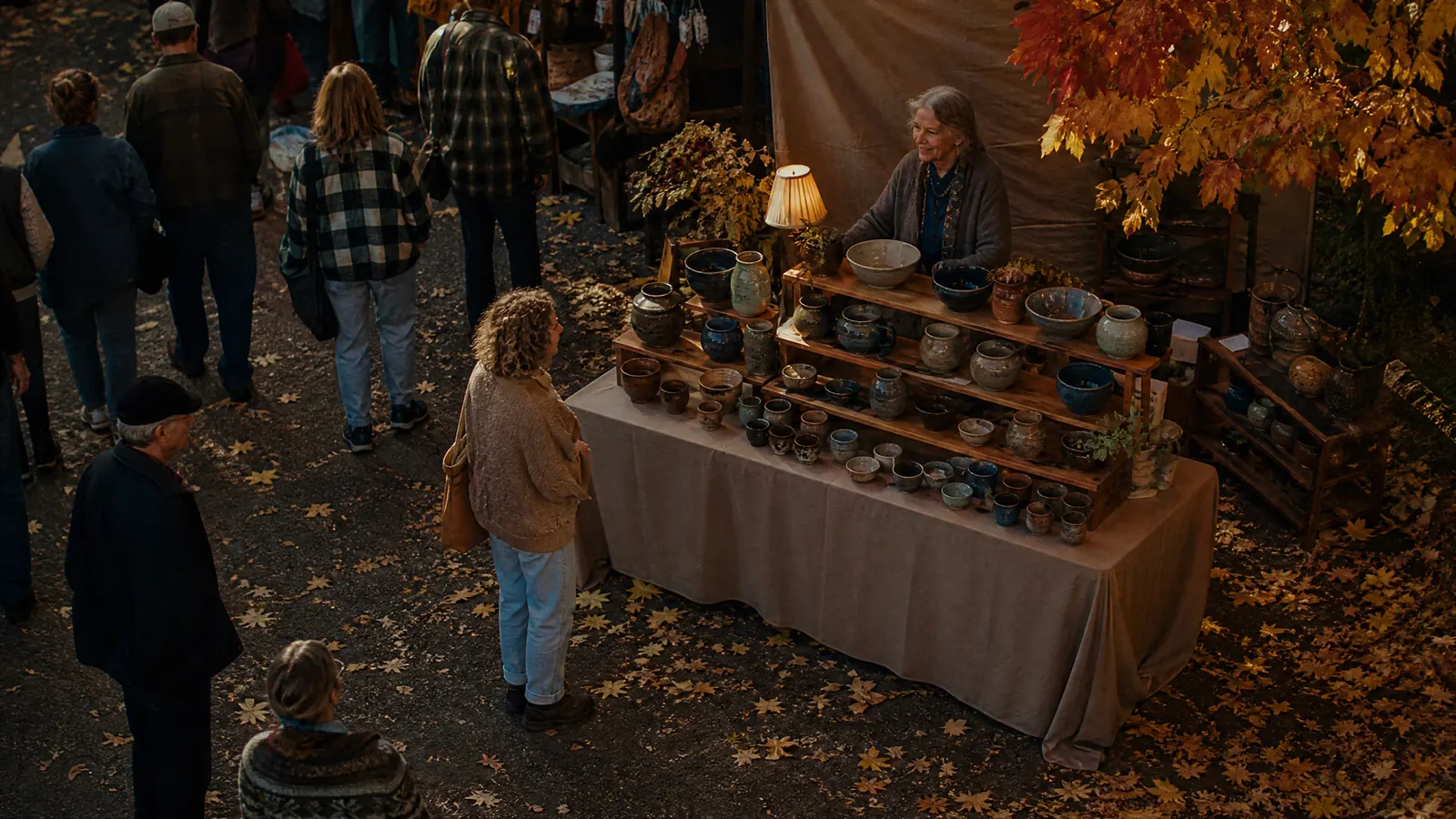
Shoppers pass a lot of tables in a short time. They are tired, they have a budget in mind, and from the aisle many tables look alike. A few small changes can make yours the one they stop at.
What a shopper sees from the aisle
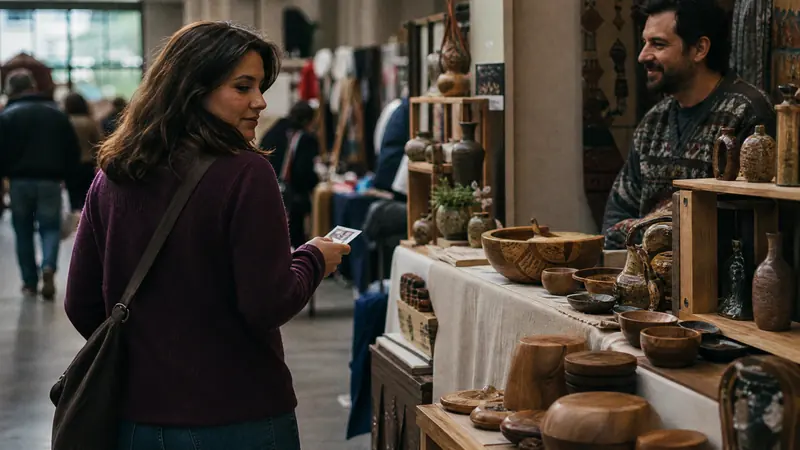
A vendor sitting low behind a flat table can look closed. A table without prices looks like work. A dim corner looks like a booth that is packing up early. People take all of this in within a second, without really thinking about it.
Six changes to make before the doors open
Stand up
Eye level invites a hello. Sitting reads as busy, even when you are just resting your feet. If you need to sit, use a tall stool and stand when someone slows down.
Build up, not out
Shelves and risers catch the eye from down the aisle. A flat table disappears among other flat tables. Height also lets you show more without crowding the front edge.
Cover the table to the floor
A full tablecloth hides boxes, spare bags and clutter, and makes the booth look finished rather than temporary. Pick a plain color that lets your work stand out.
Price everything
Many shoppers will not ask. They just keep walking. A missing price turns a simple look into a conversation with a stranger, and plenty of people would rather avoid that. Price the piece, or put one sign on the section.
Add a little light
Even during the day, a small lamp makes things glow. A battery light pointed at your main piece is often enough, and it helps a lot in the last hour when the tent gets dim.
Open with a question
"Who are you shopping for today?" gives people something easy to answer, and it gets them talking. "Can I help you?" almost always gets you a "just looking."
Lights, a full tablecloth, tape for the signs: the fair-day kit to pack the night before.
When someone slows down
Let them look. When they pick something up, tell them one true thing about it: what it is made of, how long it takes, why you started making it.
Keep your hands free and your attention on them. If you are looking at your phone while someone stands at your table, they take it as "come back later," and that is usually the last you see of them.
Making a small space work
A small table can still have height. Put two crates under the cloth as risers, or add a shelf at the back. Leave a little room at the front edge so a shopper has somewhere to set down a bag.
Walk out into the aisle and look back at your table from a few steps away. Whatever your eye lands on first is what shoppers see first. If it is a pile of bags, move them.
Prices matter as much as the layout. Read why a table with nothing under $20 loses sales.
Rearranging during the day
If a corner is not working, change it. Move the pieces people keep picking up to the front, and try the ones nobody touches at a different height. A fair day is long enough to try twice.
A few things to skip
- Eating a full meal at the table. A quiet snack behind it is fine.
- Standing in front of your own table with your arms crossed.
- Crowding every inch. Too many pieces and the eye slides right off.
- Waiting for shoppers to speak first. Say hello.
One change at a time
You do not need to rebuild your whole setup before the next fair. Pick one change, then watch the table. If more people stop, keep it. If it feels wrong, try another. Most of these cost nothing at all.
Field note: The 15-second rule at your booth: one page, one idea.
Quick answers
What should I say when a shopper stops?
Try "Who are you shopping for today?" It is easy to answer and starts a conversation without any pressure.
Is it bad to sit at my booth?
Sitting can look closed from the aisle, even when you are only resting. Stand when someone slows down, or use a tall stool.
Do I need to price every single item?
Price each piece, or put one clear sign on a whole section. A shopper who has to ask often just walks on.