
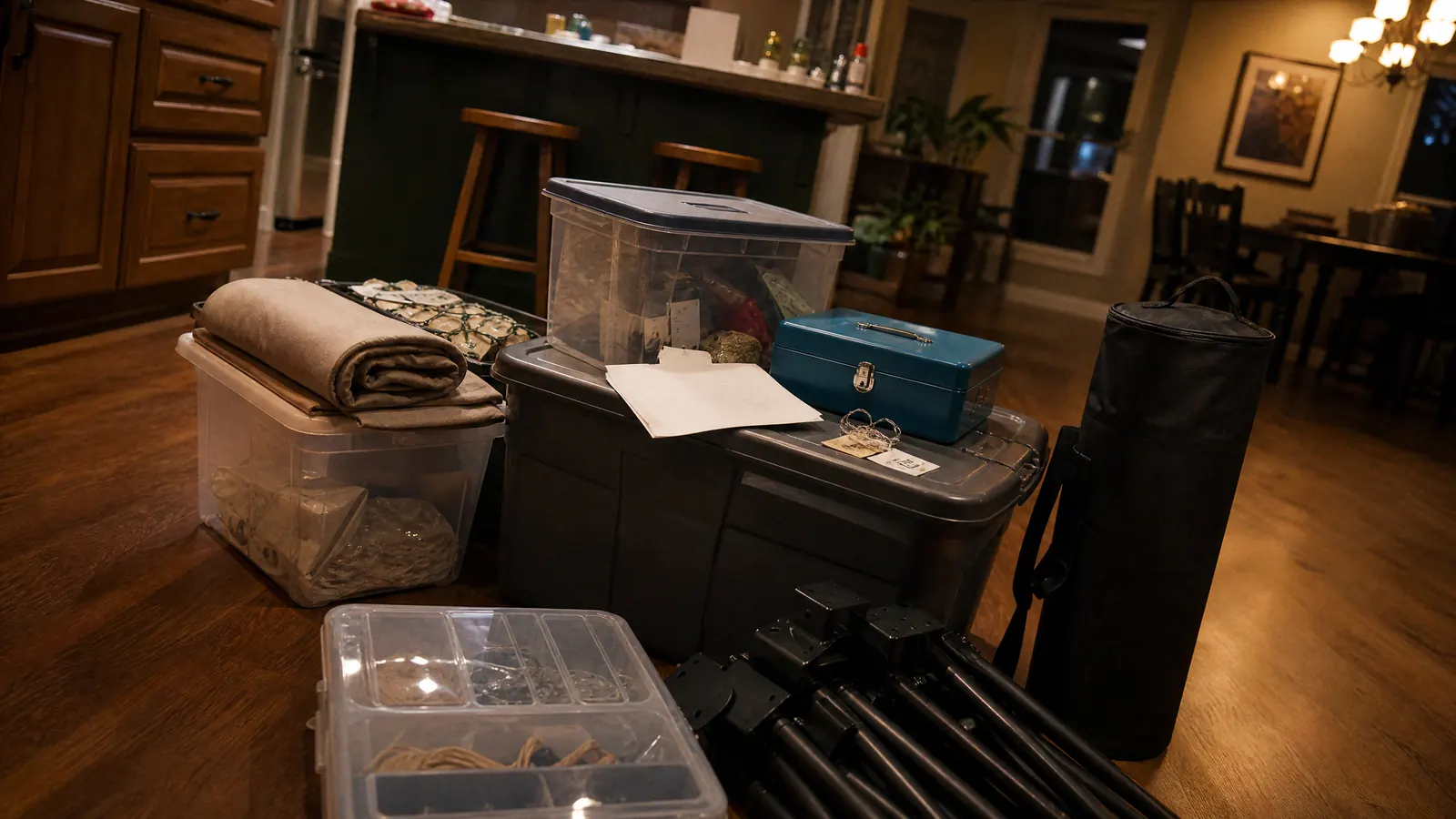
Fair mornings rarely go wrong in a big way. It is usually something small: the tape, the pen, the charger you left on the counter. You notice when the doors are already open and a customer is waiting. Pack the night before, from a list, and that problem mostly goes away.
Why the night before, and not the morning of
On the morning of a fair you are loading the car, driving, finding where to park and setting up before the first shoppers walk in. That is not the moment to remember whether the card reader is charged. If the boxes were packed the evening before, you carry them in and open them. If they were packed in a rush, you spend the first hour of the fair looking for one cable.
The fair-day kit
Tent weights
Many fairs require them and some check at setup. A gust of wind does not wait until you have finished tying things down. Put the weights in the car first so they cannot stay home.
A tablecloth that reaches the floor
It hides your boxes and makes the table look finished. You can keep extra stock underneath without shoppers seeing the clutter.
Small lights
People buy what they can see, and late in the afternoon tents get dark. Battery lights are easiest: no cords for anyone to trip on. Point one at your best piece.
A power bank
For your phone and your card reader. A reader that dies with three people waiting to pay is one of the worst moments of a fair day.
A cash box with $1s and $5s
Small bills go fast. Bring enough to make change for your first sales, and keep the box under the table rather than on top of it.
Price tags, bags, tape and a pen
These are the things you miss most. Tape for the sign that keeps falling. A pen for a custom order or a name. Bags, so someone can buy two things. And tags, because a shopper who cannot see a price often just keeps walking.
An anti-fatigue mat
By 4 PM your feet will thank you. Standing on concrete all day is nothing like standing in your kitchen.
Small bills go faster when you have small prices. Read why every table needs something under $20.
The night-before check
- Charge the card reader and the power bank.
- Run a test payment on your own card, then refund it. Now you know the reader works.
- Print or write your price signs and compare every price to your list.
- Read the fair's rules on weights, tent size and setup time.
- Look at the weather and pack for it: layers, a rain cover, clips for paper signs.
- Pack water and a snack you can eat quietly behind the table.
- Put this list in the cash box so it comes home with you.
What stays in the car
A spare tablecloth, an extra layer of clothes, water, a cloth for spills and a small tool kit. If a shelf comes loose in the morning, you want to fix it without leaving your spot.
Packed the lights and the tablecloth? Here is how to use them so shoppers stop at your table.
Pack by box, not by item
- Box one: tablecloth, risers, lights.
- Box two: your stock, in the order you will set it out.
- Box three: cash box, bags, tags, tape, pen.
- Tent weights in their own bag by the car door, so they come out first at the booth.
When each box has one job, you never have to empty everything to find the tape.
Keep your own list
Ask ten vendors what they forget and you will get ten answers. That is the reason to write it down. After each fair, add whatever you missed or wished you had, the same evening, while you still remember. After a season you will have a list that fits your own table.
Quick answers
Do fairs really require tent weights?
Many do, and some walk the rows at setup to check. Pack them first so they cannot be left behind.
What kind of cash should I bring?
A cash box with plenty of $1 and $5 bills. Small bills run out early, usually with your first few sales.
What do vendors forget most often?
Every vendor has a different answer, often a pen, tape or a charged power bank. A written list beats memory every time.