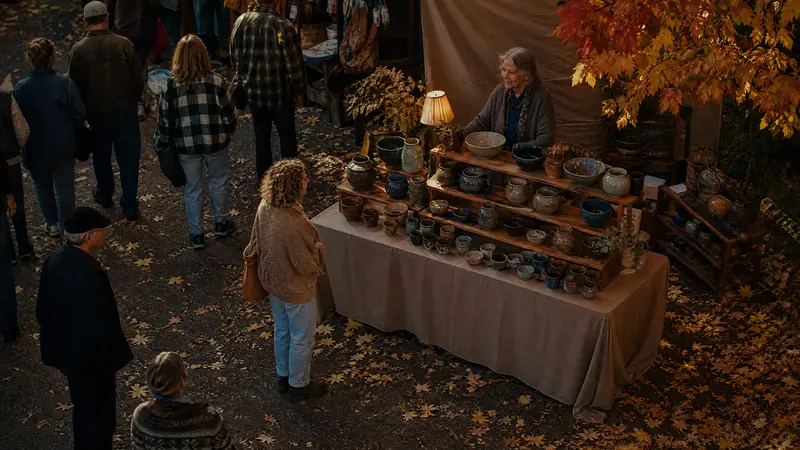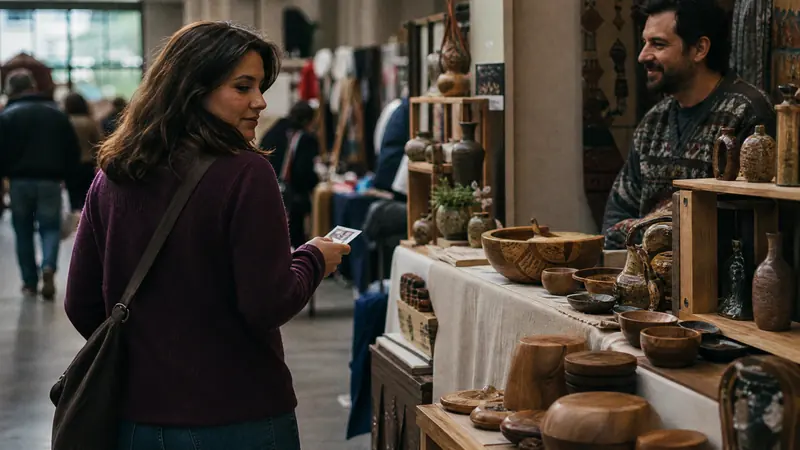
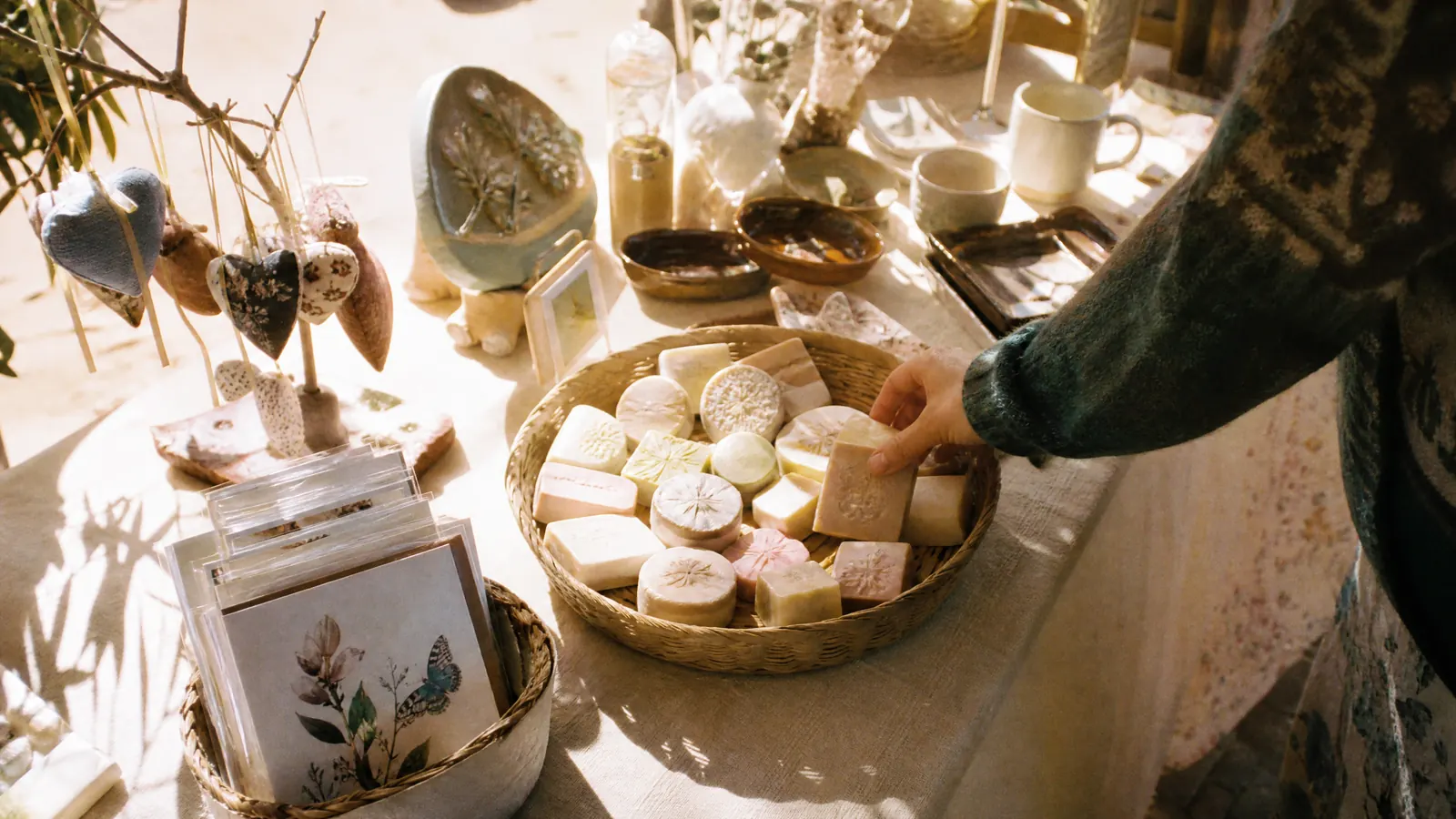
A shopper stops, picks up a piece, turns the tag over and puts it back down. Your price was fair. There was just nothing smaller on the table for someone who had planned to spend less.
The mistake
Everything on the table costs $20 or more. If your cheapest item is more than someone planned to spend at a stranger's booth, they have two options: spend more than they wanted, or walk on. Most walk on, politely, and you never find out why.
Why the small sale matters
The small yes comes first. A $12 sale starts a conversation, and some of those people come back for the bigger piece. Someone who buys a little thing leaves with your bag on their arm and your name in their head, and they know where to find you next season.
It is also a low-risk way for them to try your work. If the soap smells the way they hoped, or the card is printed on paper they like, they remember who made it.
Adding low prices without cheapening your work
Keep a low-price corner
Ornaments, soaps, cards, mini sizes: easy gifts. Keep them together in one spot, so a shopper sees the whole range at a glance instead of hunting for something affordable.
Bundle
"1 for $10, 3 for $25" moves more pieces and raises the total. It also solves the gift question for the shopper: three small things, one price, done. Nobody has to agonize over which color.
Small things in front
Small items at the edge of the table, bigger pieces behind them. The hand reaches the small thing first, and the eye travels up from there to the work that costs more.
Looking for small items that sell in November and December? See what sells best at holiday markets.
Small pieces still have to pay
Count materials and time, even for a small item. If a mini takes nearly as long as the full size, price it for the time it takes, not for its size.
Look for pieces that are quick to make: something cut from the same fabric, a smaller version of a shape you already make, a set of three little things sold together. Price each one clearly so nobody has to ask.
If everything you make is big
You still have a few options:
- A small version of your best piece.
- A set of small pieces at one price.
- Something made from the offcuts of your main work.
- A basket of clearly marked seconds at a lower price.
If a small version would look wrong for your work, skip it. Put that energy into the table instead.
Will a low-price corner hurt the big pieces?
Not if the table is arranged with care. The corner gives people a reason to stop. The big pieces give them something to want. Plenty of shoppers start with the small thing this year and come back for the bigger one next time.
Some shoppers still walk away from the big piece. Here is how to keep the buyer who says "I'll think about it".
Try it at your next fair
Put a handful of small items in one corner, add one bundle sign, move the little things to the front. Then watch the table for a day. If more people stop and pick something up, you have your answer.
Quick answers
Is it a mistake to have nothing under $20 at a fair?
It often costs you sales. A shopper who planned to spend less has no easy way in, and you never get to talk with them.
Is a bundle the same as a discount?
Not quite. A bundle like 1 for $10, 3 for $25 gives the shopper a reason to take more than one, so the sale gets bigger.
What if my smallest piece costs more than $20 to make?
Then do not force a cheap corner. Look for something small that is quick to make, rather than selling at a loss.